When feeding is difficult, it is natural to wonder what your baby’s tongue is doing. Maybe they struggle to stay latched, click during feeds, seem to swallow air, or leave you with sore nipples. You might also have noticed that feeding feels easier in one position than another.
Your baby’s tongue has a demanding job. It must move, feel, respond to milk flow and coordinate with the jaw and throat. Its function is shaped by how it developed before birth, as well as the comfort and movement your baby has now. Understanding those connections can help you recognise what deserves a closer look.
How does the tongue develop before birth?
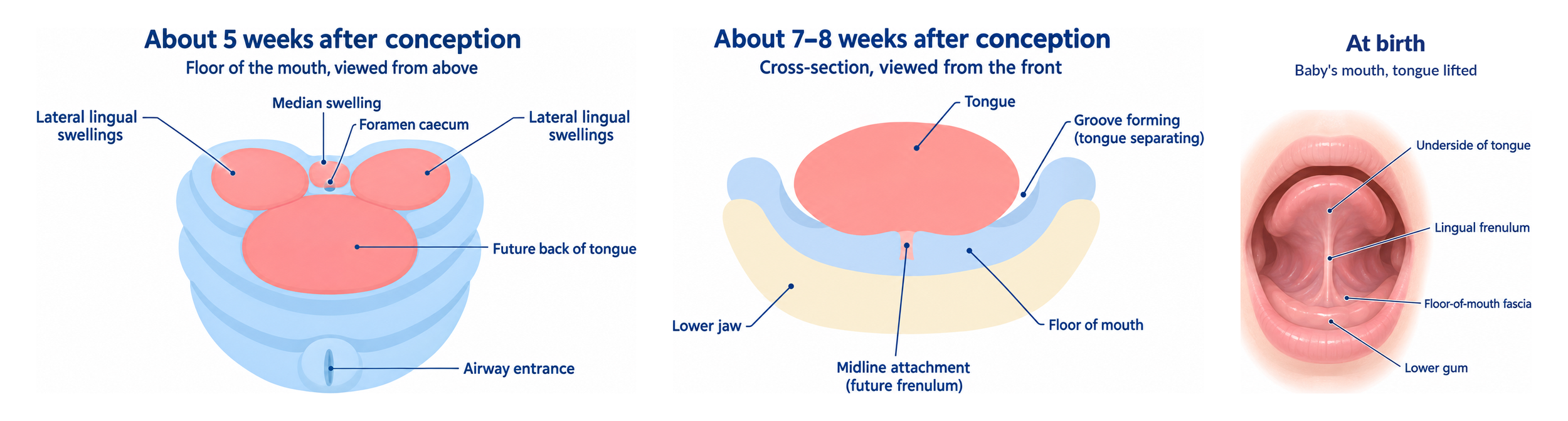
The tongue begins forming in the first weeks of pregnancy from several areas in the developing mouth and throat. As it grows, it separates from the floor of the mouth. This process involves changes in tissue growth and programmed cell death, known as apoptosis.
The lingual frenulum is the tissue fold seen beneath the tongue. One explanation of tongue tie describes incomplete separation of tissue during development, leaving a frenulum that may restrict movement. More recent anatomical research shows that the frenulum also includes a fold of the fascia across the floor of the mouth. Its depth, thickness and appearance vary between people.
This matters because a restriction is not always obvious from a quick glance. The tongue needs to be assessed as it lifts and moves, including what happens towards its middle and back. A thorough oral assessment considers the tissue beneath the tongue and whether its movement is affecting feeding. Appearance alone cannot answer that question.
What does the tongue do during feeding?
At the breast, the tongue works with the jaw to help your baby maintain attachment and create changes in pressure inside the mouth. Ultrasound studies have shown that movement of the middle and back of the tongue is closely related to suction and milk flow. The tongue then helps move milk towards the throat so your baby can swallow and continue breathing comfortably.
This is why tongue function means more than being able to poke the tongue out. A baby also needs movement within the mouth, enough lift and coordination to manage milk.
What might you notice if feeding is not going smoothly? Your baby may repeatedly lose their latch, click, seem to work hard through a feed, or struggle to manage milk flow. You may experience ongoing nipple pain or notice that one feeding position works better than another. These patterns do not tell us the cause, but they do give a skilled practitioner useful information to assess.
How is the tongue connected to the body?
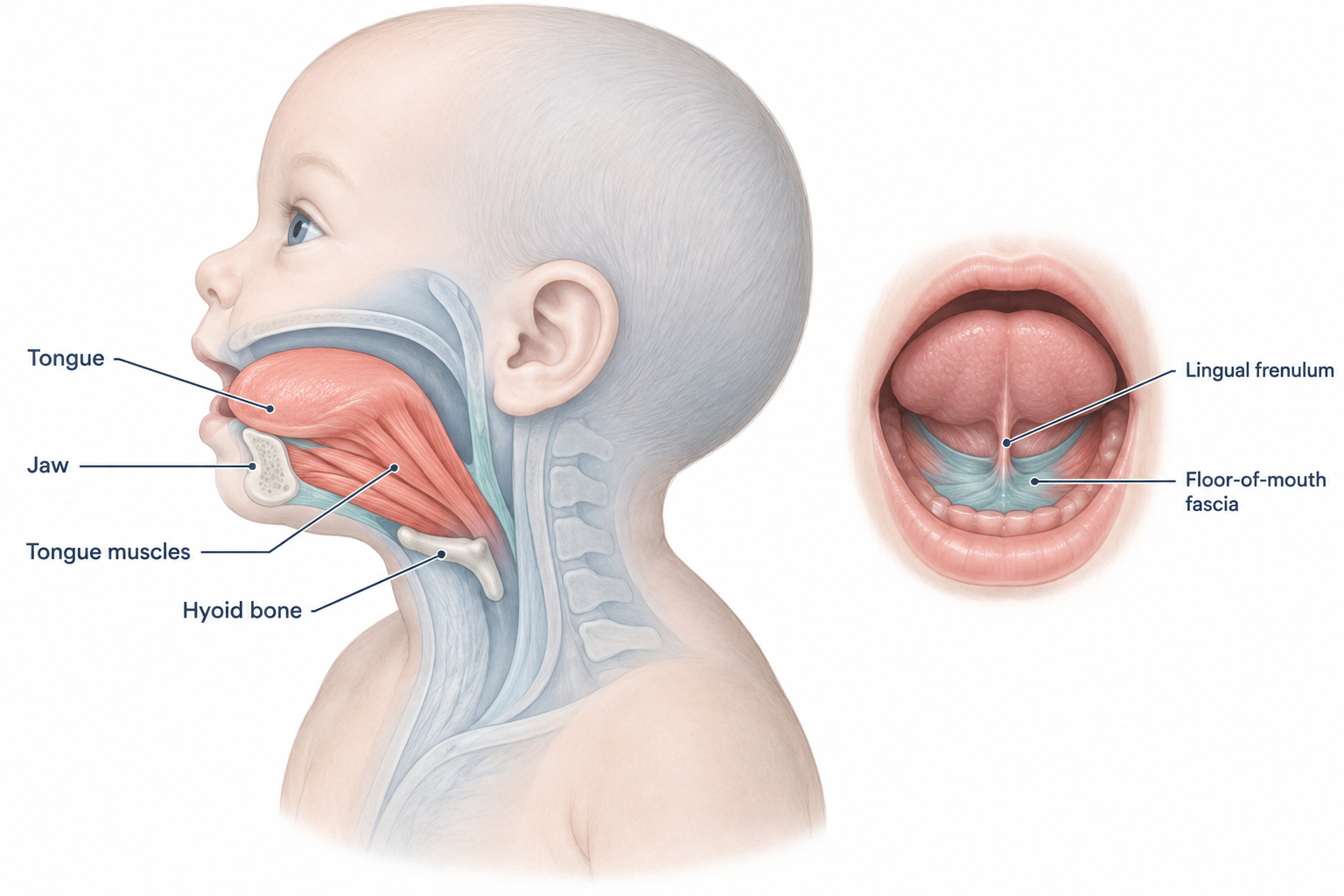
The tongue has muscular connections to the jaw and the hyoid, a small bone in the upper neck. The frenulum itself involves fascia in the floor of the mouth. That fascia sits within a wider network of connective tissue, so movement and tension in the mouth do not happen in complete isolation from the jaw, neck and the way a baby positions their body.
In practice, this can matter when a baby appears uncomfortable turning one way, has difficulty settling into a feeding position, or seems to hold tension through the jaw and neck. Those patterns may change the position available to them at the breast and how comfortably they can organise a latch.
A feeding assessment should therefore be genuinely thorough. Alongside watching a feed, a practitioner with appropriate training in infant oral function can examine beneath the tongue and assess lift, movement, tissue tension and the way the tongue functions during feeding. This is especially important when a restriction towards the middle or back of the tongue is suspected and is not obvious on a brief visual check.
Why do nerves and sensory input matter?
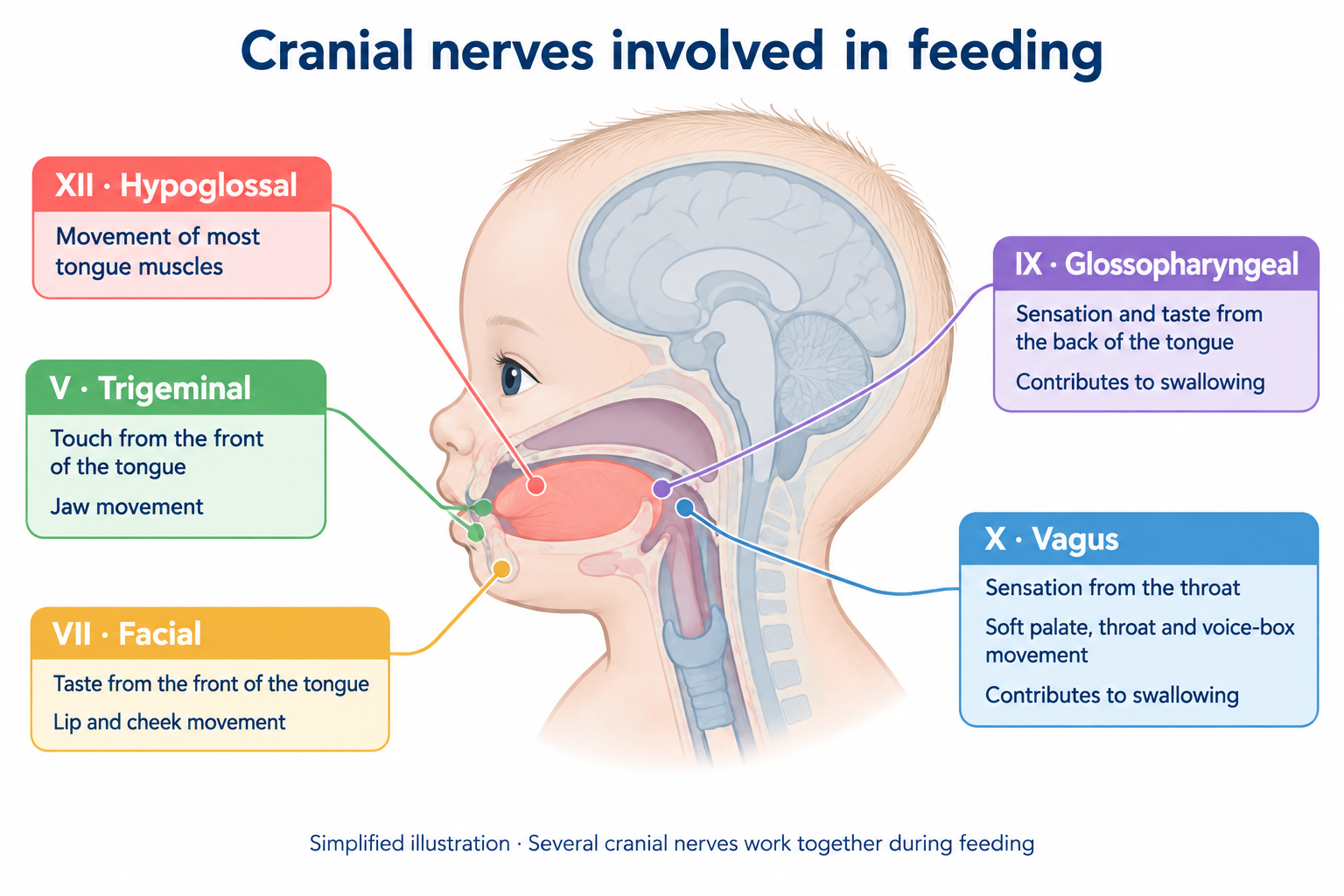
Several cranial nerves contribute to feeding. The hypoglossal nerve controls most tongue muscles. The trigeminal nerve carries touch information from the front of the tongue and helps move the jaw. The facial nerve contributes taste information from the front of the tongue and helps control the lips and cheeks. The glossopharyngeal and vagus nerves carry information from further back and contribute to swallowing and throat function.
These nerves help the brain and mouth communicate. Birth strain, discomfort following birth or a strong preference for one head position may influence how comfortably a baby can use their jaw, neck and tongue together. If feeding is difficult, those movement patterns deserve attention alongside an assessment of the tongue itself. They do not, by themselves, establish that a nerve has been injured.
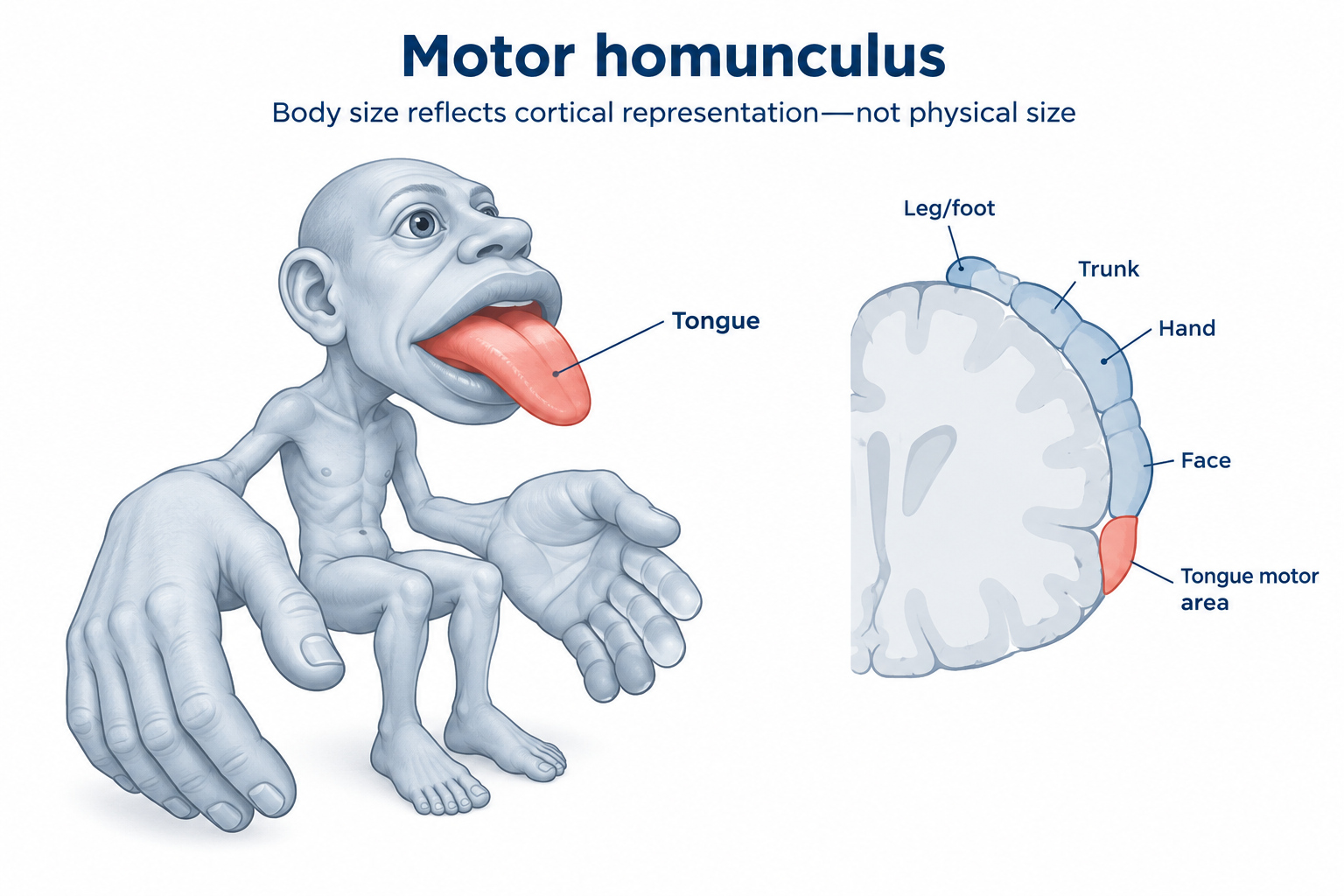
The tongue also sends a great deal of sensory information to the brain. You may have seen the homunculus, a drawing that maps body parts according to how much brain area is involved in sensing and moving them. The tongue and mouth appear large relative to their physical size because they need fine sensation and precise movement.
For a baby, this helps explain why touch and movement in the mouth matter so much during feeding. The tongue senses the breast or teat and responds as milk arrives, while the nervous system coordinates the movements needed to manage that milk. The homunculus is a helpful picture of this close brain and mouth connection, not a test that can tell us whether an individual baby is feeding well.
What can parents do to support tongue function?
Notice the pattern across a feed. Can your baby attach and stay attached? Do you hear swallowing? Is feeding comfortable for you? Does your baby seem to feed more easily in one position? You do not need to decide what these signs mean before asking for help.
Try positions that let your baby’s body feel supported and their head move comfortably towards the breast. If a position consistently seems difficult, change it rather than trying to hold your baby’s head in place.
If pain or feeding difficulty continues, seek an assessment from an International Board Certified Lactation Consultant, often called an IBCLC, or another clinician with additional training in infant feeding and tongue tie assessment. They can observe milk transfer and feeding rhythm, assess oral movement and examine beneath the tongue. When appropriate, they can help you decide whether further assessment of a suspected restriction is needed.
If your baby also seems uncomfortable turning their head or settling into feeding positions, an appropriately trained infant practitioner may assess comfort and movement. Gentle support for positioning or oral movement should be tailored to your baby.
When to seek medical advice
Contact your GP, maternal and child health nurse or paediatric clinician promptly if your baby is feeding poorly, refusing feeds, too sleepy to feed, having fewer wet nappies or not gaining weight as expected. Seek urgent medical care if your baby has breathing difficulty, turns blue or grey, has a significant choking episode, or seems unusually floppy or unresponsive. A fever in a young baby also needs prompt assessment.
The takeaway: tongue function is important to feeding, and assessing it properly means more than asking a baby to poke out their tongue. If feeding is painful or difficult, seek someone who can observe a feed, examine oral movement thoroughly and consider your baby’s comfort and positioning together.
This article provides general education only and does not replace individual assessment. If you are concerned about your baby’s feeding, weight gain, breathing, vomiting or overall wellbeing, seek advice from your GP, maternal and child health nurse, paediatric clinician or appropriately qualified infant feeding professional.
Loved this post? Pin the graphic!
Related Posts:




Learn how to differentiate between colic and reflux symptoms in 4 simple steps.
When feeding is difficult, it is natural to wonder what your baby’s tongue is doing. Maybe they struggle to stay latched, click during feeds, seem to swallow air, or leave you with sore nipples. You might also have noticed that feeding feels easier in one position than another.
Your baby’s tongue has a demanding job. It must move, feel, respond to milk flow and coordinate with the jaw and throat. Its function is shaped by how it developed before birth, as well as the comfort and movement your baby has now. Understanding those connections can help you recognise what deserves a closer look.